Supreme Court Cannabis Case: What It Means For Your Business

On December 12, 2025, the U.S. Supreme Court will meet behind closed doors to decide if it will hear Canna Provisions v. Bondi, a case that asks a simple but powerful question: can the federal government keep enforcing cannabis prohibition inside state legal markets?
For cannabis operators, this is not an abstract constitutional debate. It sits at the center of how you access banking, handle taxes, plan expansion, and communicate risk to investors. Even the decision to hear the case would signal that the Court is finally ready to revisit the logic behind federal cannabis prohibition.
The petition from a group of Massachusetts based cannabis businesses argues that applying the federal Controlled Substances Act to fully regulated, intrastate cannabis activity exceeds Congress’s power under the Commerce Clause. In plain language, they are saying Washington should not treat a state licensed dispensary the same way it treats interstate drug trafficking.
Why This Case Is Different From Past Challenges
The cannabis industry has seen legal challenges before, but the context in 2025 looks very different. Dozens of states now allow medical or adult use cannabis, and public support for legalization continues to rise. That reality is one reason organizations like the Cato Institute and Americans for Prosperity have filed briefs supporting the petition.
As summarized by The Cannabis Business Advisors’ December 3, 2025, federal update, the petitioners argue that continuing to enforce a nationwide ban inside mature state markets no longer matches today’s legal and economic landscape. They want the Court to revisit earlier precedent and narrow federal power over purely intrastate cannabis activity.
At the same time, coverage from Shanken News Daily highlights how this case has also caught the attention of adjacent industries and investors. A ruling that trims federal authority in cannabis could influence how other regulated products are treated at the state level in the future.
Practical Implications For Cannabis Operators
So what would a favorable ruling eventually mean in practice? No one can promise specific outcomes, but there are several areas where change becomes more likely if the Court decides to hear the case and later sides with the plaintiffs.
- Banking and payments: A narrower view of federal prohibition would make it easier for traditional financial institutions to justify serving licensed cannabis operators.
- Tax treatment: Pressure would grow to revisit how 280E applies to compliant, state licensed cannabis businesses.
- Interstate strategy: Multi state brands could plan for future cross border operations in a less hostile federal environment.
- Valuations and exits: Investors often price in federal risk. Any signal that risk is shrinking can change how deals are structured and valued.
That kind of shift rewards operators who already treat compliance, documentation, and visibility as core business assets rather than side projects.
Why Online Visibility Becomes Strategic Risk Management
Legal change does not erase competition. If the Supreme Court opens the door for a softer federal stance, more capital and more brands will come into the space. When that happens, the operators who win attention will be the ones that customers and search engines can actually find.
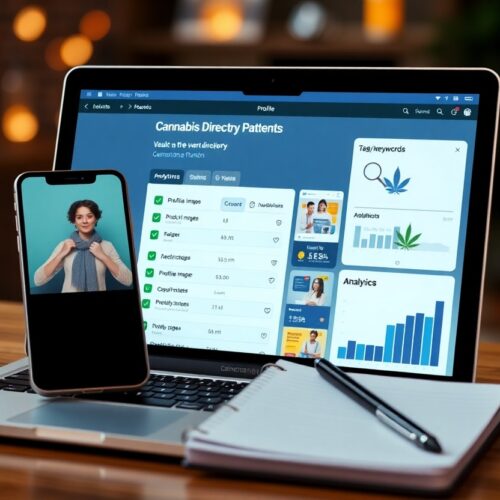
This is where your digital footprint starts to look like risk management. A complete profile on a trusted cannabis business directory sends a clear trust signal to customers who want vetted, real world businesses. When people search for dispensaries, delivery options, or brands in your area, visibility on a curated platform can be the difference between being discovered and being invisible.
For example, if you stock delta 8 THC products, you can use a listing that points directly to CannaMapr’s dedicated delta 8 product category so customers see that offering clearly. Dispensaries, cultivators, and brands that rely on hemp derived SKUs can also lean on focused pages like the hemp products section to highlight specific inventory.
Action Steps Before The December 12 Conference
No one can control what the Court does on December 12. You can, however, control how ready your business is for the next phase. A few concrete steps:
- Audit your listings: Make sure your business appears accurately on platforms like CannaMapr, including hours, address, license status, and core product categories.
- Claim relevant categories: If you operate a storefront, confirm you appear in the main dispensary directory. If you are a producer, ensure you are visible under cultivators or other applicable verticals.
- Strengthen backlinks: Treat high quality, relevant backlinks as infrastructure. A do follow link from a credible cannabis directory is far more valuable than a random mention on a low quality site.
- Track policy news: Follow ongoing coverage from outlets like Marijuana Moment’s reporting on the Supreme Court conference so you can brief your team and investors with confidence.
These steps help no matter how the Court rules, because they improve customer trust and search visibility in the markets you serve right now.
Looking Beyond The Courtroom
Canna Provisions v. Bondi is part of a broader pattern. States continue to refine cannabis and hemp rules, federal agencies are reevaluating enforcement guidance, and local regulators are still learning how to balance public health with market growth. In that environment, stability comes from building a recognizable brand, a strong reputation, and a clear digital footprint.
By tightening your operations and showing up consistently where customers search, you position your business to benefit from legal clarity when it arrives instead of scrambling to catch up afterward.
CannaMapr is here to help you stay visible while the rules evolve. With a trusted network and real time updates, we make it easier to connect with quality providers and grow your online presence.