

What Businesses Need to Know About the New Framework
Virginia lawmakers have taken a decisive step toward launching the South’s first recreational cannabis market, unveiling a revised framework that could see adult-use sales begin by November 2026. The proposal, detailed by the Virginia Mercury, represents a significant shift from previous attempts and includes several provisions designed to favor small, independent operators over large multistate companies.
For cannabis businesses considering expansion into Virginia, understanding this framework is essential for strategic planning. Here’s what you need to know.
Key Provisions of the Revised Framework
The Joint Commission on the Future of Cannabis Sales spent months refining legislation after Governor Glenn Youngkin vetoed previous retail bills. Their revised approach includes:
- No Local Opt-Outs: Cities and counties cannot ban cannabis retail sales within their jurisdictions, ensuring statewide market access.
- Consolidation Protections: License holders are capped at five locations statewide, preventing large operators from dominating the market.
- Microbusiness Priority: Fifty percent of licenses will be reserved for “impact licensees” – small businesses that meet at least four of seven race-neutral criteria tied to past criminalization, agricultural distress, or geographic disadvantage.
- Direct-to-Consumer Delivery: A new license category allows microbusinesses to deliver directly to patients and adult-use consumers.
Tax Structure: Sales face an 8% state tax with localities able to add up to 3.5% additional tax.
Timeline for Market Launch
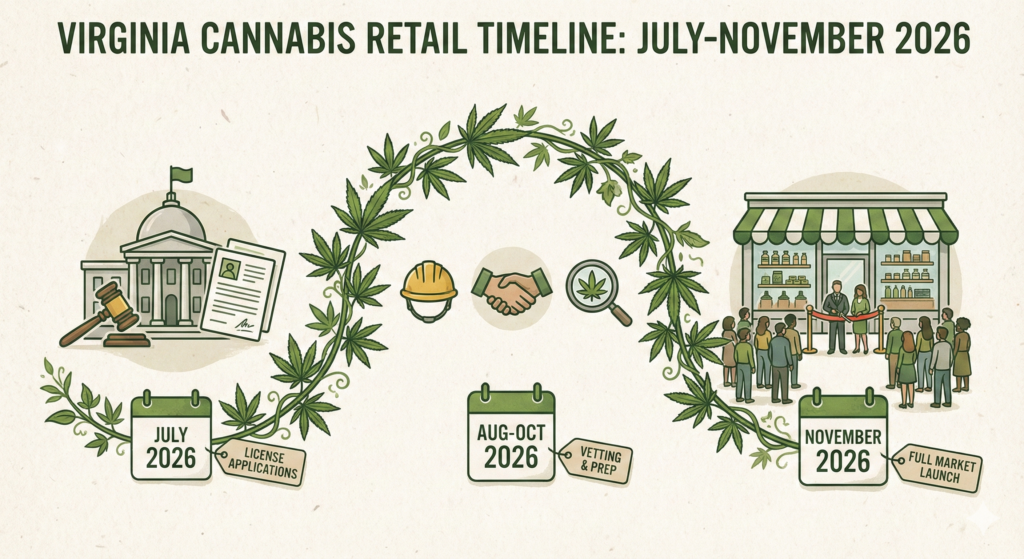
According to MJBizDaily reporting, the rollout follows this schedule:
- July 1, 2026: License applications open
- September 2026: Early microbusiness operations can begin
- November 1, 2026: Full retail market launches
This accelerated timeline gives businesses approximately seven months to prepare applications once the framework becomes law. Governor-elect Abigail Spanberger has pledged to sign the legislation following thorough review.
Market Size and Existing Players
Virginia’s medical cannabis market is currently limited to five operators, each assigned to specific geographic regions:
- Ayr Wellness (Miami-based, undergoing liquidation)
- Jushi (Boca Raton, Florida)
- Green Thumb Industries (Chicago)
- The Cannabist Co. (formerly Columbia Care, New York)
- Verano Holdings Corp. (Chicago)
The MjBiz Factbook projects Virginia’s adult-use market could reach $780 million in its first full year and exceed $1.09 billion by the second year. With 8.6 million residents, Virginia represents one of the largest new cannabis markets to open in recent years.
What This Means for Your Business
For cannabis operators considering Virginia expansion, several strategic considerations emerge:
- Early Preparation: With applications opening July 2026, businesses should begin compliance planning, financial modeling, and site selection now.
- Microbusiness Opportunities: The 50% license reservation for impact licensees creates significant opportunities for smaller operators, particularly those with connections to communities disproportionately affected by past cannabis prohibition.
- Geographic Strategy: Without local opt-outs, the entire state represents potential market access. However, the five-location cap means careful geographic planning is essential.
- Tax Planning: The combined 11.5% maximum tax rate (8% state + 3.5% local) requires careful pricing strategy, especially given federal 280E restrictions that prevent standard business deductions.
SEO and Visibility in an Emerging Market
As Virginia’s cannabis market develops, establishing early online visibility becomes increasingly valuable. Businesses that position themselves as authorities during this pre-launch phase will capture significant search traffic as consumers begin researching options.
Consider these strategies:
- Local SEO Optimization: Ensure your business directory listings accurately reflect your planned Virginia service areas and compliance status.
- Educational Content: Create resources explaining Virginia’s new cannabis framework, licensing requirements, and market opportunities.
- Backlink Building: Quality do-follow links from authoritative sources signal credibility to both search engines and potential licensing authorities. A verified CannaMapr listing provides this authority while connecting you with patients and consumers navigating Virginia’s evolving cannabis landscape.
Looking Ahead
The revised framework represents Virginia’s most concrete step toward recreational cannabis since legalizing possession in 2021. By removing local opt-outs and prioritizing small businesses, lawmakers aim to create a more equitable market than those in neighboring states like Maryland, where large operators dominated early licensing.
Del. Paul Krizek, the commission’s chair, emphasized that while the exact bill text remains under revision, commissioners are “100% on the same page” about the structure needed to launch retail sales by the November 2026 target.
For cannabis businesses, Virginia’s 2026 launch represents both opportunity and urgency. Those who begin preparation now will be best positioned to capitalize on the South’s first major recreational market.
CannaMapr is here to help you navigate Virginia’s evolving cannabis regulations and establish visibility ahead of the 2026 launch. With a trusted network and real-time updates, we make it easier to connect with quality providers and grow your online presence.